For more than a decade, global oil forecasts have relied on one reliable assumption: China’s growing truck fleet would continue to burn more diesel every year. That assumption is now breaking under the weight of a deliberate, system-wide electrification strategy that targets not just vehicle sales but the entire freight operating model.
The shift is not subtle. China’s heavy-truck electrification programme, as detailed by CleanTechnica and the TFIE Strategy Briefing, aims for 40% of new heavy-truck sales to be new-energy vehicles by 2030. That translates to more than 1.6 million electric trucks in operation—roughly 20% of the national heavy-truck fleet. But the more revealing target is 18% of highway freight volume. China is not simply swapping drivetrains; it is concentrating electric trucks in the most commercially active, high-mileage freight operations where diesel displacement per vehicle is maximized.
This distinction matters enormously for oil markets. Passenger electric vehicles (EVs) have already eroded gasoline demand growth. But diesel is the more important denominator for global oil balances because commercial trucks operate longer hours, carry heavier loads, and burn far more fuel per vehicle. Electrifying a minority of the most intensively used trucks can remove a disproportionately large share of diesel demand. China’s programme is designed to do exactly that, and the early commercial evidence suggests it is working faster than most forecasts anticipated.
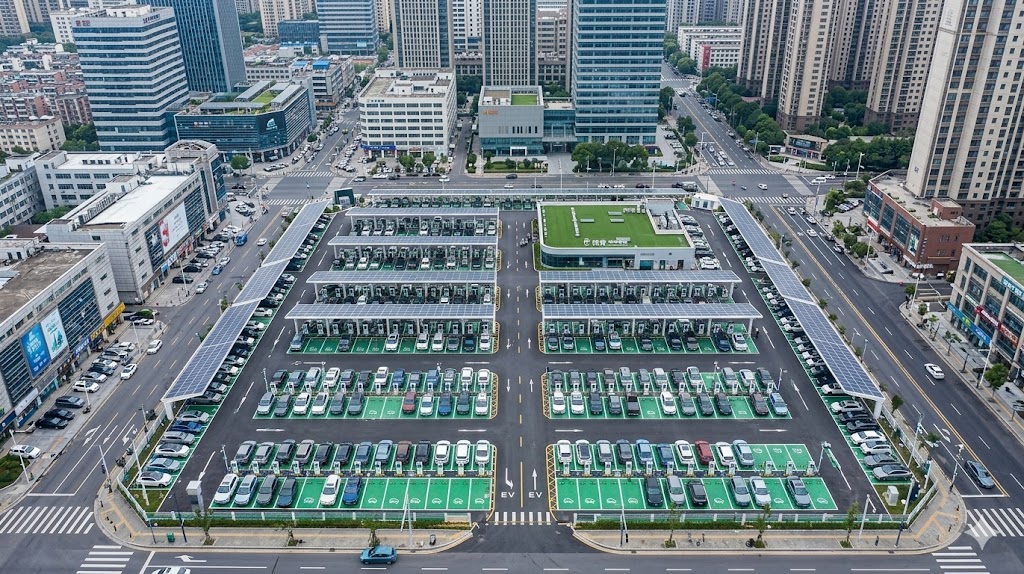
Core Data: China’s Heavy-Truck Electrification Targets and Progress
The following tables summarize the key numerical targets and early adoption data that underpin the diesel-displacement analysis.
Table 1: China’s 2030 New-Energy Heavy-Truck Targets
| Metric | Target | Source/Context ||---|---|---|| New-energy heavy-truck sales share | 40% | Government policy mandate || Cumulative electric trucks in operation | 1.6 million | ~20% of national heavy-truck fleet || Highway freight volume electrified | 18% | Concentrated in commercial routes || Zero-carbon highway freight corridors | ~30,000 km | Infrastructure backbone || Heavy-truck charging & battery-swapping stations | ~3,000 | Supported by grid integration plans || LNG truck diesel displacement (2030 est.) | ~775,000 bbl/day | State-linked research estimate || Passenger EV gasoline displacement (2025 est.) | ~582,000 bbl/day | Running estimate |
Table 2: Early Adoption Signal (H1 2025)
| Indicator | Value | Implication ||---|---|---|| Electric heavy-truck share of new sales | ~25% | Already above linear path to 40% by 2030 || Dominant deployment segments | Ports, mines, steel mills | Predictable routes, high utilization || CATL & Sinopec planned network | Higher than government target | Commercial infrastructure scaling faster than policy || Impact on LNG truck sales | Electric trucks cutting into LNG share | Technology preference shifting toward full electrification |
Data compiled from CleanTechnica reporting, TFIE Strategy Briefing analysis, and IEA Oil 2025 outlook.
Why This Is a Freight System, Not a Vehicle Mandate
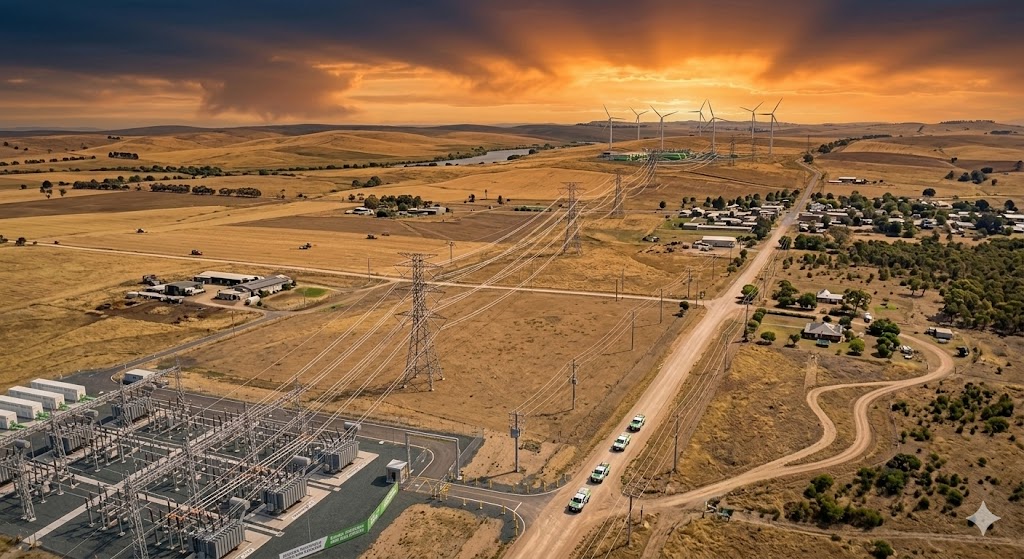
The critical insight that oil forecasters risk missing is that China’s programme is being built as an integrated freight system rather than a simple vehicle-sales mandate. It connects trucks to depots, logistics parks, ports, mines, highway service areas, repair networks, insurance, and distribution-grid planning. Grid companies are being instructed to include truck charging and swapping demand in their investment plans. This systemic approach addresses the operational constraints that matter most to fleet operators: uptime, route certainty, energy cost, maintenance, and financing.
A few electric trucks in demonstrations are an adoption signal. Electric trucks tied to corridors, depots, grid capacity, and repeatable operating routes are a diesel-displacement system. The difference is profound. Fleet operators will not adopt electric trucks if they cannot be dispatched tomorrow without special handling. China’s policy is aimed at exactly those operational realities, which is why early adoption has been concentrated in ports, mines, and steel mills—applications with predictable routes and intensive vehicle use that can remove large amounts of fuel quickly.
Bottom-Up Diesel Displacement Estimate: A Screening Calculation
A bottom-up screening estimate, based on combining the 20% fleet target with 18% of highway freight volume and concentrating deployment among commercially active trucks, puts the potential diesel effect in the range of several hundred thousand barrels per day by 2030. This is not an official forecast and should not be treated as a precise outcome, but it is large enough to affect a national oil-demand forecast rather than merely the truck market.
The calculation depends on annual kilometres, payload, vehicle efficiency, which diesel trucks are scrapped, and how much freight growth occurs. But even conservative assumptions—assuming electric trucks operate at 70% of the annual mileage of the diesel trucks they replace, and that diesel displacement per truck is 80% of the theoretical maximum due to grid constraints—still yield a displacement of 200,000 to 400,000 barrels per day. At the higher end of the range, that is roughly equivalent to the entire oil production of a small OPEC member.
The Broader Erosion: LNG, High-Speed Rail, and Structural Change
Electric trucks are only one part of the erosion. LNG trucks are not a climate solution, but from Beijing’s energy-security perspective, they displace petroleum diesel. Chinese state-linked researchers estimated that LNG heavy trucks could replace about 775,000 barrels per day of diesel by 2030. Meanwhile, passenger EVs were already displacing an estimated 582,000 barrels per day of gasoline in 2025. High-speed rail, electric urban logistics, and weaker construction activity further narrow the transport-fuel growth pool.
The International Energy Agency has already changed its direction of travel. China added nearly 6 million barrels per day of oil demand between 2015 and 2024, accounting for roughly 60% of global growth over that period. The IEA’s Oil 2025 outlook now expects Chinese demand to peak this decade as EVs, LNG trucks, high-speed rail, and structural economic changes weaken road-fuel consumption. That is much closer to the emerging evidence than forecasts that continue to treat China as a durable combustion-growth engine.
What This Means for Global Oil Forecasts
OPEC remains more optimistic about long-term oil demand, although even its near-term projections are moving. It cut its 2026 global demand-growth forecast again in July. The important disagreement is no longer whether China alone supplies all future growth. It is whether losses from Chinese road transport can be offset by petrochemicals, aviation, slower electrification elsewhere, and growing consumption in other emerging economies. That pathway is possible, but it is not the familiar story of China adding more cars, trucks, road freight, and fuel every year.
Crude-import data can temporarily obscure the change. China imported about 11.55 million barrels per day in 2025, while Rystad estimated that stockbuilding accounted for roughly 430,000 barrels per day. Low prices, sanctions discounts, refinery economics, new storage capacity, and energy-security policy can keep crude flows high even as gasoline and diesel demand weaken. That does not rescue the structural demand story; it separates durable consumption from inventory behaviour.

Conclusion: The Diesel Denominator Is Breaking
China’s target does not require every truck to become electric by 2030. Most will not. The relevant point is that 20% of the fleet, carrying 18% of highway freight and concentrated in high-use corridors, is enough to matter at national diesel scale. It is enough to affect expectations for refinery output, crude imports, and global oil-demand growth.
Passenger EVs weakened the gasoline denominator. China’s freight programme is now weakening the diesel denominator. Oil forecasts built around the previous Chinese transport system are increasingly modelling a market that China is already replacing.
For energy analysts and investors, the key takeaway is that the traditional relationship between Chinese economic growth and oil demand is structurally broken. The next decade will not see a repeat of the 2015-2024 pattern where China added nearly 6 million barrels per day of demand. Instead, the focus must shift to understanding how quickly the diesel displacement scales, which segments of the oil value chain are most exposed, and how the global refining system will adapt to a world where the largest source of demand growth has become a source of demand destruction.
Recommended Reading from InfoLab Energy
- Ford’s Bounty Culture and UEV Platform: A Blueprint for EV Cost Parity?
- Toyota & Daihatsu’s Shared EV Platform: A Strategic Play for Japan’s Last-Mile Market
Sources & References:
"Toyota & Daihatsus Shared EV Platform A Strategic Play for Japans Last-Mile Market"