The global electric vehicle industry is witnessing a structural transformation that few predicted just five years ago. Chinese automakers, long viewed as domestic players or low-cost exporters, are now embedding themselves directly into the European manufacturing ecosystem. The latest evidence comes from an unexpected partnership: Stellantis, the multinational automaker born from the merger of Fiat Chrysler and PSA Group, has joined forces with Chinese state-owned automaker Dongfeng to build luxury electric vehicles in France.
This is not a simple supply agreement or technology licensing deal. It is a full-fledged joint venture that will see Dongfeng's premium Voyah brand rolling off assembly lines at Stellantis' Rennes plant, a facility that first opened its doors in 1960 and once produced over 400,000 vehicles annually at its peak. The move signals that European protectionism, while real, is not stopping the inevitable integration of Chinese EV technology and manufacturing capability into the continent's automotive heartland.
The partnership structure itself tells a powerful story about how the balance of power has shifted. Stellantis will hold 51% of the joint venture, while Dongfeng will own 49%. This is the exact reverse of the arrangement that prevailed for decades in China, where Western automakers were limited to minority stakes in joint ventures with Chinese partners. The role reversal is not symbolic — it reflects the new reality that Chinese automakers now possess the technology, supply chain expertise, and cost advantages that legacy automakers need to compete in the electric era.
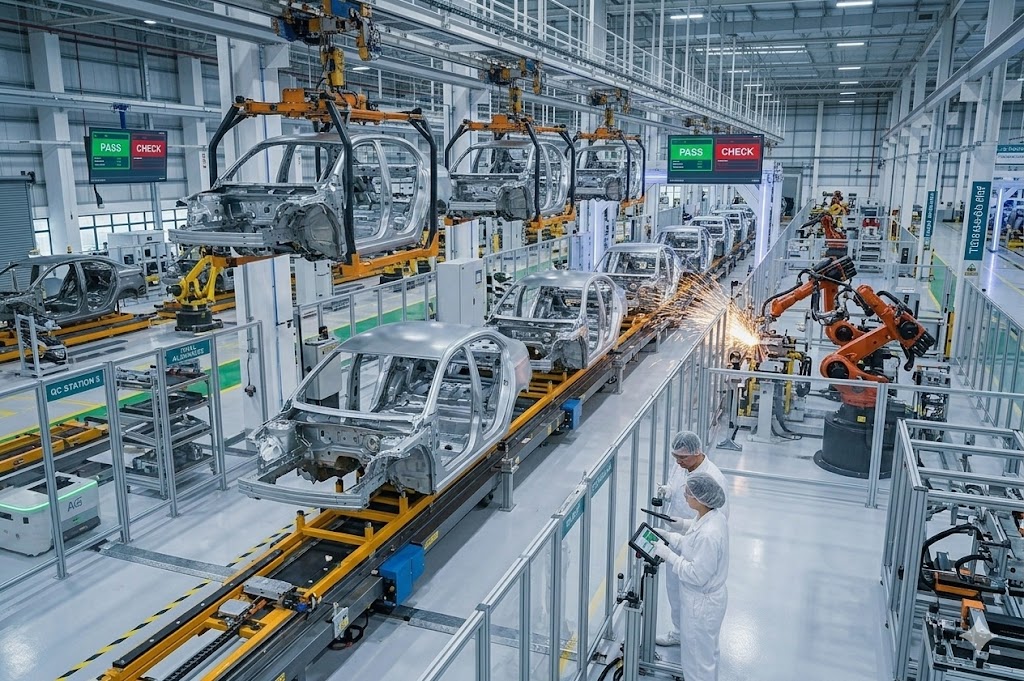
Key Data Points: The Stellantis-Dongfeng Joint Venture
| Metric | Detail |
|---|---|
| Joint Venture Ownership | Stellantis 51% / Dongfeng 49% |
| Production Location | Rennes, France (Stellantis plant) |
| Brand Produced | Voyah (Dongfeng luxury EV brand) |
| Plant History | Opened 1960; peak production 400,000+ vehicles/year |
| Deal Type | Joint venture manufacturing agreement |
| Geographic Focus | European market |
| Competitive Context | Follows BYD's reported interest in acquiring underutilized Stellantis factories |
Comparative Analysis: Reverse Joint Venture Structures
| Era | Region | Structure | Meaning |
|---|---|---|---|
| 1980s-2020s | China | Foreign automaker 49% / Chinese partner 51% | Foreign access to Chinese market via technology sharing |
| 2025-2026 | Europe | European automaker 51% / Chinese partner 49% | Chinese access to European market via local production |
| 2026 onward | Global | Emerging hybrid structures | Mutual dependency on technology, supply chains, and market access |
The Rennes plant's capacity utilization will be a critical metric to watch. At its peak, the facility produced over 400,000 vehicles annually, but like many legacy European plants, it has operated well below capacity in recent years. The joint venture could breathe new life into the facility, potentially adding 100,000 to 200,000 units of annual EV production capacity — though exact targets have not been disclosed.
Why This Partnership Matters Beyond the Headlines
The Stellantis-Dongfeng deal represents more than just another EV manufacturing announcement. It is a signal that the geography of automotive production is being fundamentally redrawn. For decades, the flow was one-directional: Western automakers built factories in China to serve the Chinese market. Now, Chinese automakers are building (or co-building) factories in Europe to serve European consumers.
This shift is driven by multiple factors. European regulators have been considering tariffs on Chinese-made EVs, which would make direct export less profitable. Local production bypasses these trade barriers entirely. Additionally, European consumers and fleet operators increasingly prefer vehicles manufactured locally, viewing them as more reliable and easier to service. Dongfeng's decision to produce Voyah vehicles in France addresses both concerns simultaneously.
The choice of the Voyah brand is also strategic. Voyah is Dongfeng's luxury EV brand, positioned to compete with European premium automakers like BMW, Mercedes-Benz, and Audi — as well as Tesla and NIO. By manufacturing in France, Voyah gains European legitimacy and avoids the "import brand" stigma that has historically limited Chinese automakers' premium ambitions in Western markets.
The Broader Trend: Chinese EV Makers Going Local in Europe
Stellantis is not alone in opening its factory doors to Chinese partners. Multiple legacy automakers are exploring similar arrangements as they struggle to match Chinese EV cost structures and battery supply chain integration. The logic is compelling: rather than spending billions to develop competitive EV platforms from scratch, European automakers can leverage Chinese technology while retaining control of distribution, branding, and service networks.
However, this strategy carries risks. Labor unions in France and across Europe have expressed concerns about potential job displacement and wage pressure as Chinese manufacturing practices are introduced. The French government, which holds a stake in Stellantis through Bpifrance, will be watching closely to ensure that local employment and industrial policy objectives are met.
For readers interested in the broader landscape of how Chinese automakers like BYD and Foxconn are reshaping global EV production, our analysis of the emerging manufacturing map provides useful context. Similarly, understanding the investment trends driving this transformation helps explain why capital continues flowing into clean energy manufacturing despite political headwinds.
Conclusion: A New Model for Global EV Manufacturing
The Stellantis-Dongfeng joint venture in Rennes is not an isolated deal — it is a template for what is likely to become a dominant model in the global EV industry over the next decade. The "reverse joint venture" structure, where European automakers hold majority stakes but Chinese partners provide core technology and manufacturing expertise, represents a pragmatic compromise between industrial sovereignty and competitive necessity.
Independent Analysis: What This Means for the Industry
From an InfoLab Energy perspective, this deal highlights three critical trends. First, Chinese EV technology has reached parity with — and in some areas surpassed — legacy automaker capabilities, giving Chinese firms unprecedented bargaining power in partnership negotiations. Second, European automakers are prioritizing speed-to-market over vertical integration, choosing partnerships over internal development to close the EV gap. Third, the geography of EV manufacturing is becoming increasingly distributed, with production following market demand rather than home-country advantages.
What to Watch Next
Industry observers should monitor three developments closely. The production ramp at Rennes will test whether Chinese manufacturing efficiency can be successfully transferred to a European workforce and regulatory environment. The response from French labor unions and political stakeholders will set precedents for future Chinese-European automotive partnerships. And the competitive response from other Chinese automakers — particularly BYD, which has been exploring its own European factory acquisitions — will determine whether these partnerships become the industry standard or remain niche arrangements.
The clean energy investment trends that underpin this transformation show no signs of slowing. As we have documented, capital continues flowing into EV manufacturing capacity regardless of political cycles or trade disputes. The Stellantis-Dongfeng deal is simply the latest evidence that the energy transition is being built, not debated — one factory, one joint venture, one partnership at a time.
Recommended Reads
- For a deeper look at how Foxconn, BYD, and Nigeria are reshaping the global EV manufacturing map, see our analysis of global EV manufacturing trends.
- To understand the investment trends driving this transformation despite political uncertainty, read our overview of clean energy investment momentum in 2026.
Sources & References:
"Beyond Politics The Unstoppable Investment Trends in Clean Energy"